

Hear from Our Customers
You’ve noticed the musty smell in the basement. Maybe someone in your house has been coughing more than usual, or you’re dealing with allergies that won’t quit. You might have spotted discoloration on a wall after that pipe leak last winter.
Here’s what matters: you can’t fix a mold problem you can’t confirm. And you definitely can’t fix one you can’t find.
Professional mold testing tells you exactly what you’re dealing with. Not just whether mold is present, but what type, how much, and where it’s hiding. That means you’re not tearing out drywall on a hunch or throwing money at a problem that might not exist. You get lab results that show the species of mold and the concentration levels in your air and on surfaces.
This is how you protect your family’s health without overspending. This is how you stop mold before it spreads into your HVAC system or behind finished walls. And if you’re buying or selling a home in Weisel, this is how you avoid surprises that kill deals.
We’ve been serving homeowners throughout Bucks County with one focus: accurate testing that leads to smart decisions. Pennsylvania requires licensing to conduct professional mold assessments, and that’s exactly what you get when you call us.
Weisel’s climate creates the perfect conditions for mold growth. Warm, humid summers and damp winters mean basements, crawl spaces, and attics stay moist longer than most homeowners realize. Add in the fact that many homes in this area were built before 1970, and you’ve got older construction materials that hold moisture differently than modern builds.
You’re not getting a sales pitch from us. You’re getting an inspection from licensed professionals who use thermal imaging, moisture meters, and air sampling to find problems in places you’d never think to look.
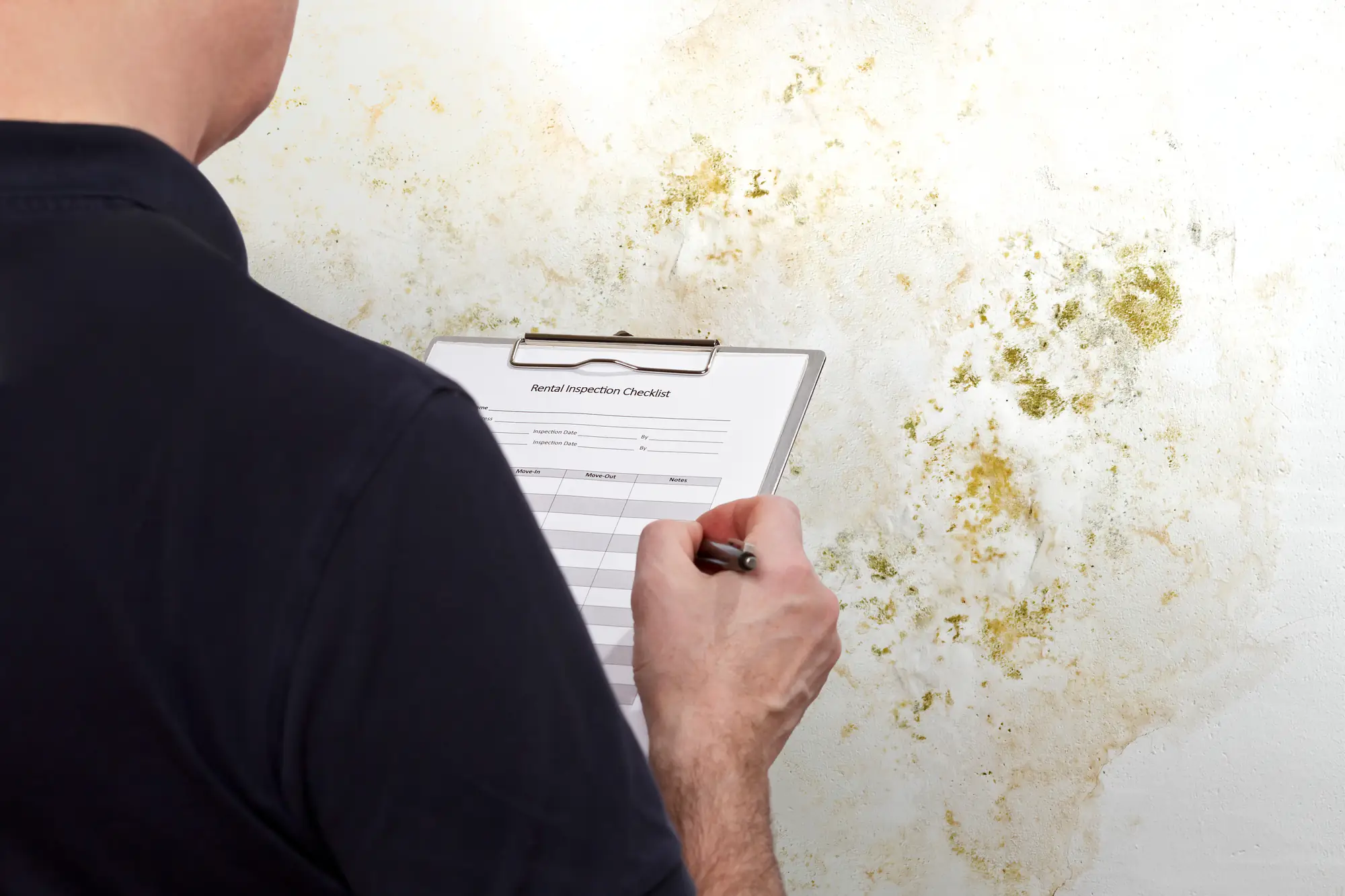
First, we walk through your home and talk about what you’ve noticed. Odors, visible growth, water damage history, health symptoms—it all matters. This isn’t a checklist. It’s a conversation that helps us know where to look.
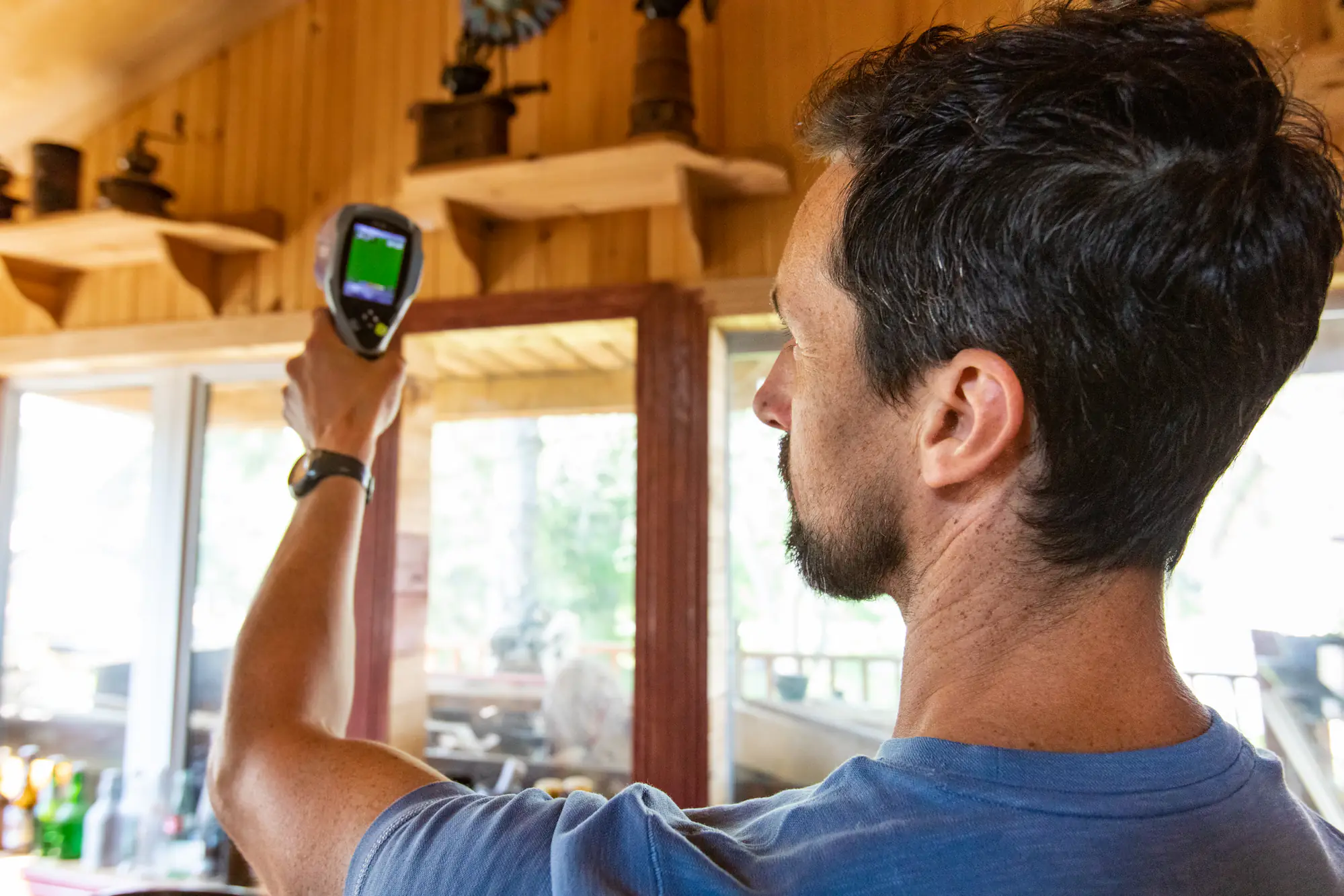
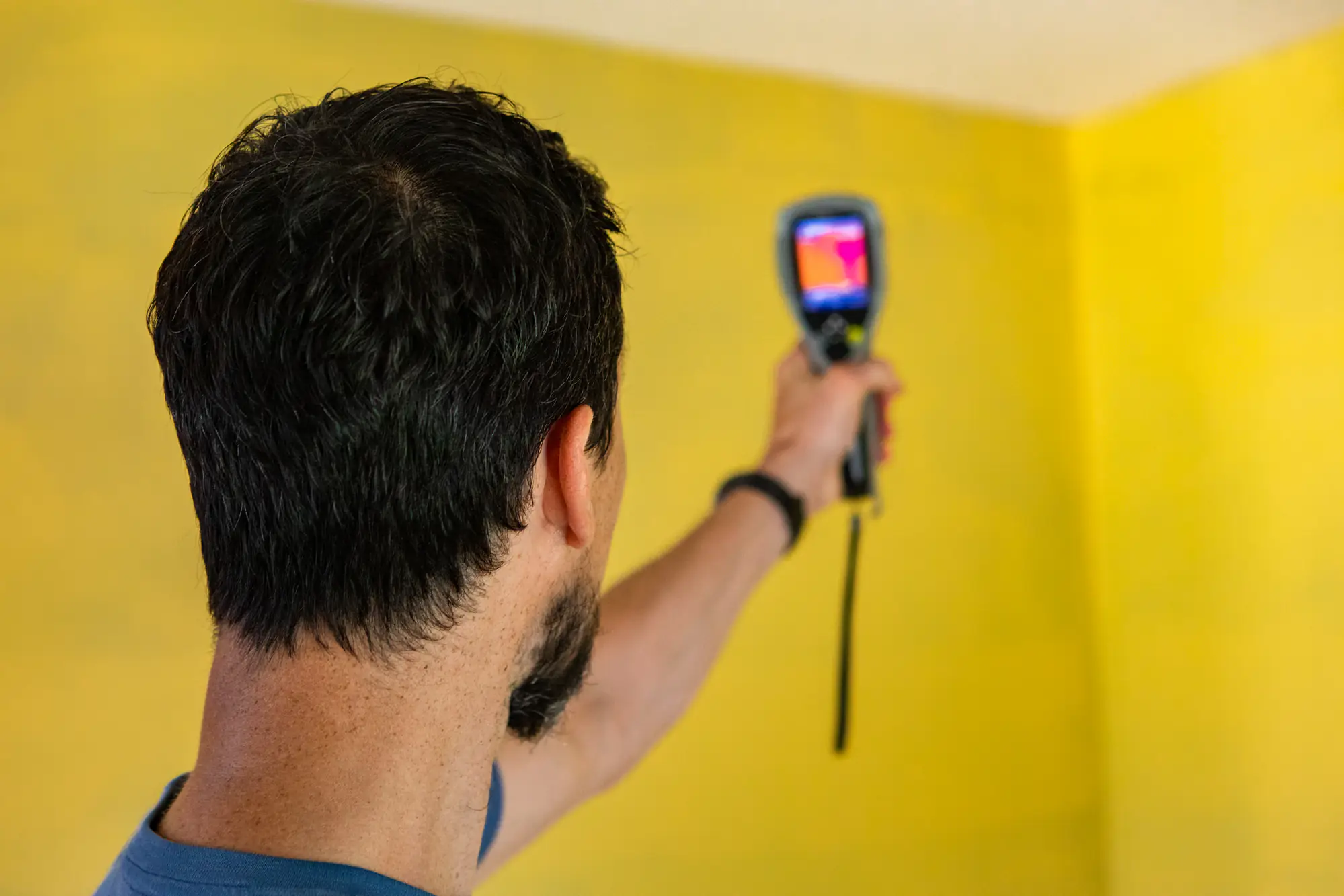
Next, we use moisture meters and thermal imaging to find hidden water intrusion. Mold grows where moisture sits, and moisture hides in wall cavities, under flooring, and inside ductwork. We’re checking areas you can’t access without tearing things apart.
Then comes air sampling and surface testing. We collect samples from multiple areas of your home and send them to an independent lab. You’ll get results that show which mold species are present and at what levels. If the lab finds elevated spore counts or identifies toxic mold like Stachybotrys (black mold), you’ll know exactly what you’re dealing with.
After we get the lab results back, we walk you through what they mean. If remediation is needed, we’ll explain what that looks like. If the levels are normal, we’ll tell you that too. You get a written report either way.
Ready to get started?
You’re getting a visual inspection of your entire home, including basements, attics, crawl spaces, and HVAC systems. We’re looking for visible mold, water stains, condensation issues, and ventilation problems.
You’re also getting moisture mapping with professional-grade tools. We measure moisture levels inside walls, ceilings, and floors to find hidden water intrusion that leads to mold growth. In Bucks County, this is critical—homes here deal with high humidity in summer and ice damming in winter, both of which create moisture problems that aren’t always obvious.
Air sampling captures mold spores in your indoor air and compares them to outdoor baseline levels. Surface sampling collects physical mold growth from walls, floors, or other materials. Both get sent to a certified lab, and you receive a detailed report showing mold species, spore counts, and contamination levels.
If the testing reveals a problem, you’ll also get a remediation strategy. That’s not a sales pitch—it’s a roadmap. You can take that report to any mold remediation company you want. The goal is to give you accurate information so you can make the right call for your home and your family.
If you’re smelling something musty that won’t go away, that’s reason enough. Mold has a distinct odor, and if you’re noticing it in your basement, bathroom, or near your HVAC system, there’s likely growth somewhere.
You should also test if anyone in your home is experiencing unexplained respiratory issues, headaches, or allergy symptoms that get worse indoors. Mold releases spores and mycotoxins that affect air quality, and some people are more sensitive than others.
Any history of water damage is another red flag. Even if you cleaned up after a leak or flood, moisture can linger in insulation, wall cavities, and subfloors. Mold can start growing within 24 to 48 hours of water exposure, and it doesn’t always show up on surfaces right away. Testing is the only way to know if remediation is needed or if you’re in the clear.
A mold inspection is the visual walkthrough. That’s when a certified inspector examines your home for visible mold, moisture problems, water damage, and conditions that encourage mold growth. It includes using tools like moisture meters and thermal imaging cameras to detect hidden issues.
Mold testing goes a step further. It involves collecting air samples, surface samples, or both, and sending them to a lab for analysis. The lab identifies the specific mold species present and measures spore concentration levels. This tells you not just that mold exists, but what kind it is and how severe the contamination is.
You usually get both during a professional mold assessment. The inspection finds the problem areas, and the testing confirms what’s growing and how much of it you’re dealing with. That combination gives you the full picture, which is what you need to make informed decisions about remediation.
You can, but you’re not going to get reliable results. Most over-the-counter kits only tell you that mold is present—which isn’t useful, because mold spores exist in every home. What matters is the type of mold and the concentration levels, and those kits don’t measure that accurately.
Home test kits also don’t account for proper sampling techniques. Where you place the test, how long you leave it out, and how you handle it all affect the results. A certified mold inspector knows how to collect samples in a way that reflects actual conditions in your home, and they’re trained to interpret what the lab results mean.
If you’re trying to save money, that’s understandable. But if the results come back unclear or you end up needing professional testing anyway, you’ve just delayed the process. For the cost of a professional inspection, you get accurate data, expert analysis, and a clear path forward—not guesswork.
The inspection itself usually takes one to two hours, depending on the size of your home and how many areas need attention. If you’ve got a finished basement, an attic, and multiple bathrooms, it’s going to take longer than a small ranch with no crawl space.
Once we collect the samples, they go to an independent lab for analysis. Lab results typically come back within three to five business days. You’ll receive a detailed report that breaks down mold species, spore counts, and contamination levels for each area tested.
After that, we’ll schedule a follow-up call or meeting to walk you through the findings. If remediation is recommended, we’ll explain what that involves and answer any questions you have. The whole process from inspection to results usually wraps up within a week, so you’re not left waiting around wondering what’s happening in your home.
No. Mold testing is non-invasive. Air sampling uses a small pump to collect airborne spores, and surface sampling involves using a swab or tape lift to gather mold from visible areas. Neither method requires cutting into walls or removing materials.
If we need to check moisture levels inside a wall or ceiling, we use a non-penetrating moisture meter or thermal imaging camera. These tools detect moisture without causing any damage. In rare cases where we suspect hidden mold behind a wall, we might recommend a small inspection hole—but that only happens if there’s strong evidence of a problem, and we’ll discuss it with you first.
The goal is to get accurate information without tearing up your home. If remediation is needed later, that’s a separate process, and you’ll know exactly what to expect before any work begins. Testing itself leaves your property exactly as we found it.
You’ll get a clear report showing what type of mold is present, where it’s located, and how severe the contamination is. From there, you decide what to do next. If the mold levels are low and the species isn’t toxic, you might just need to address the moisture source and monitor the area.
If the lab identifies elevated spore counts or toxic mold species like Stachybotrys, remediation is usually recommended. That means containing the affected area, removing contaminated materials, cleaning surfaces, and fixing the underlying moisture problem. Pennsylvania is moving toward regulations that separate testing companies from remediation companies, so you’ll have unbiased results and the freedom to choose who does the work.
You’re not locked into anything. The report is yours, and you can take it to any remediation company you want. The point of testing is to give you accurate information so you’re not guessing, overpaying, or ignoring a problem that’s going to get worse. You’ll know exactly what you’re dealing with and what it’s going to take to fix it.
Other Services we provide in Weisel